


EPR Compliance Made Simple - From
Registration to Full Fulfillment
Manage Extended Producer Responsibility effortlessly. Register, calculate targets, and meet obligations—all in one place.
Check Your EPR Obligation

What Is Extended Producer Responsibility (EPR)?
Extended Producer Responsibility (EPR) is simple: If you make it, import it, or sell it in India, you manage its waste.Under India's environmental laws—including the Plastic Waste Management Rules (2016), E-Waste Management Rules (2022), Battery Waste Management Rules (2022), and Hazardous Waste Rules (for tyres)—producers are legally responsible for collecting and recycling their products at end-of-life.
How EPR Works in India
1 ) Register with CPCB
Report your product sales data
2 ) Calculate Your Target
System auto-generates annual recycling targets
3 ) Source Recyclers
Partner with CPCB-certified processors
4 ) Collect & Recycle
Meet compliance targets
5 ) File Returns
Submit quarterly and annual reports

Why EPR Exists
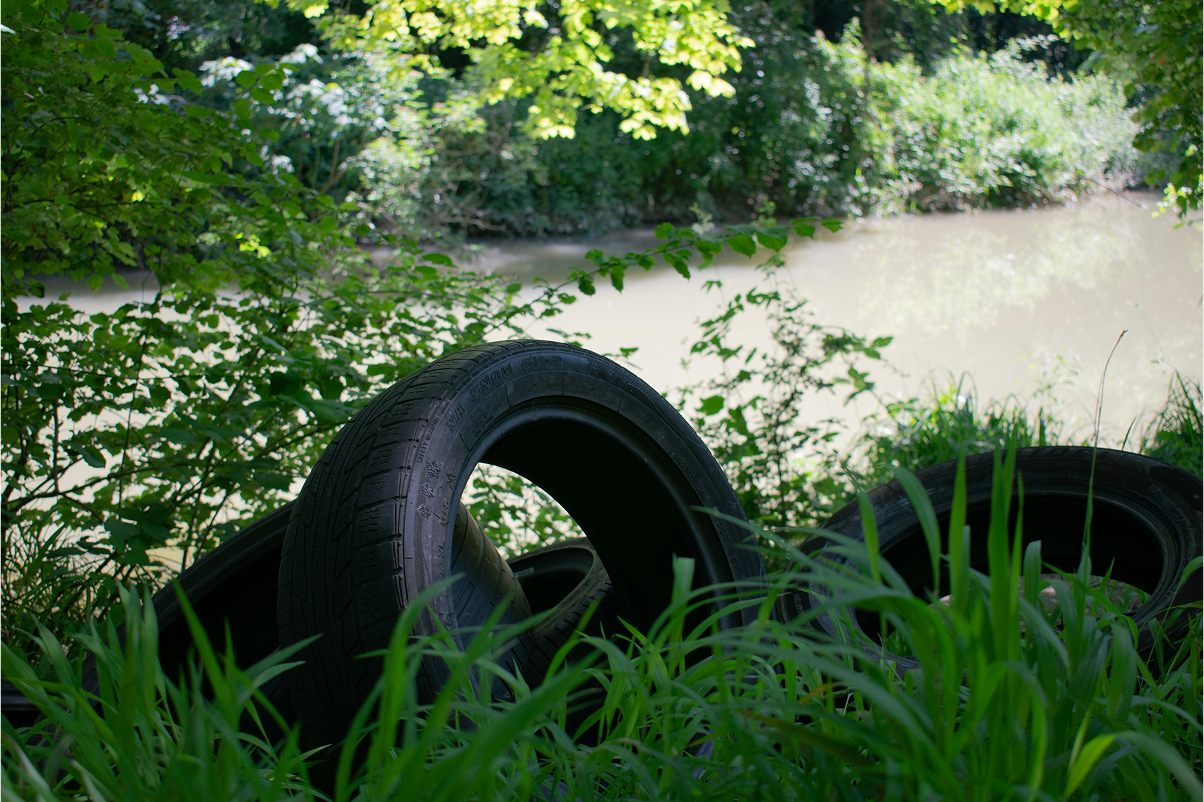
India generates over 50 million tonnes of waste annually, with plastic, e-waste, batteries, and tyres growing the fastest. EPR shifts the burden from municipalities to producers—incentivizing design for recycling and creating a circular economy.
EPR Categories - Know Your Obligations
Four major waste streams. One integrated compliance approach.

Plastic Packaging Waste
Applies to
Register under the Plastic EPR system.Set and achieve waste collection and recycling targets.Ensure environmentally responsible disposal.
Requirement
Must comply with India’s Plastic Waste EPR Rules.
Key actions
- Register under the Plastic EPR system.
- Set and achieve waste collection and recycling targets.
- Ensure environmentally responsible disposal.
How we help
By-products of pH balancing in manufacturing.

E-Waste (Electronic & Electrical Equipment)
Applies to
Establish take-back and recycling systems.Ensure safe and responsible disposal of e-waste.
Requirement
Must follow E-Waste Management Rules under India’s EPR regime.
Key actions
- Establish take-back and recycling systems.
- Ensure safe and responsible disposal of e-waste.
How we help
By-products of pH balancing in manufacturing.

Battery Waste (Lead-Acid & Lithium-ion)
Applies to
Collect and recycle used batteries safely.Maintain records of end-of-life disposal.
Requirement
Comply with the Battery Waste Management Rules.
Key actions
- Collect and recycle used batteries safely.
- Maintain records of end-of-life disposal.
How we help
By-products of pH balancing in manufacturing.

Tyres, Vehicles & Other Waste Categories
Applies to
Register and track waste streams as per government rules.Implement recycling or recovery processes.
Requirement
Follow category-specific EPR regulations.
Key actions
- Register and track waste streams as per government rules.
- Implement recycling or recovery processes.
How we help
By-products of pH balancing in manufacturing.
Why EPR Compliance Matters for Your Business
Beyond legal obligation—EPR unlocks growth and market access
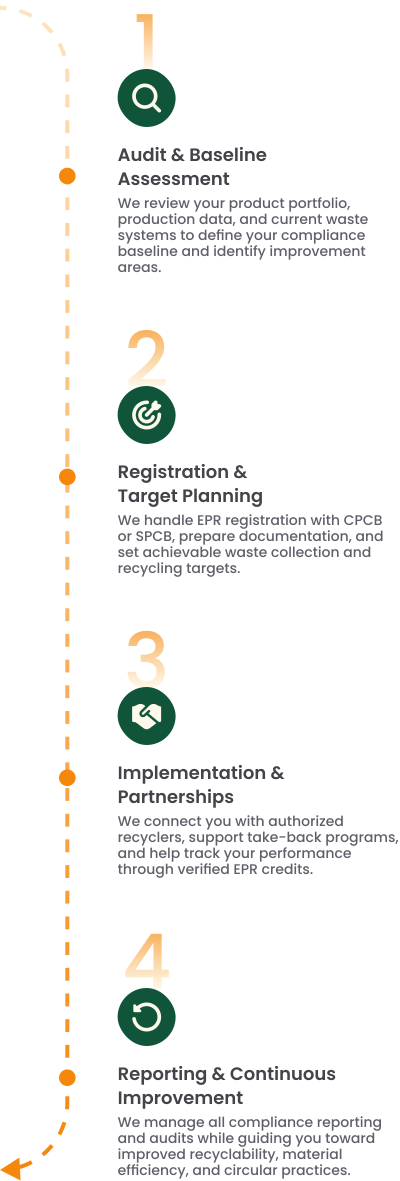
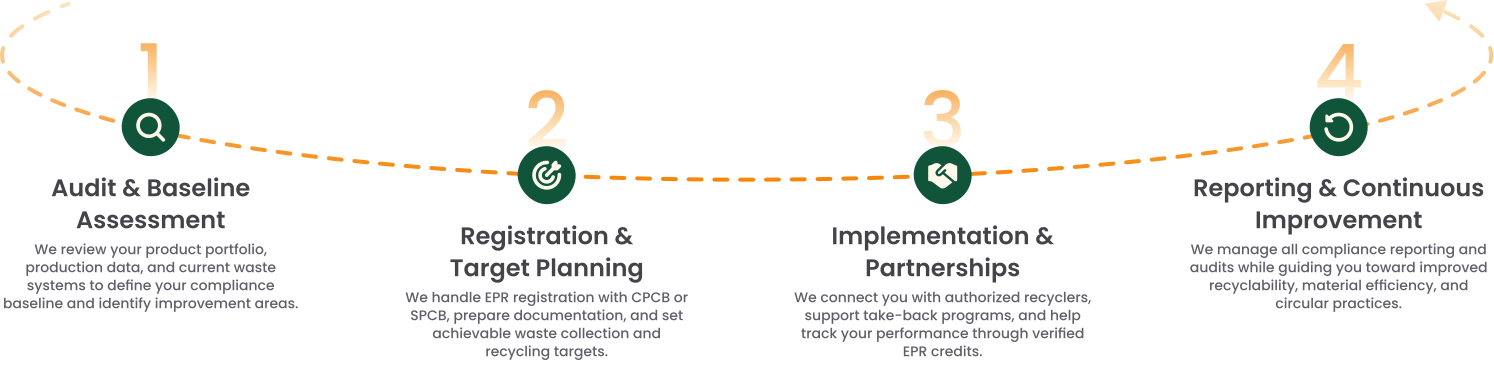
Our 4-Step EPR Compliance Process
A clear, end-to-end approach to help your business stay compliant, sustainable, and audit-ready under India’s EPR regulations.
Why EPR Compliance Matters for Your Business
Beyond legal obligation—EPR unlocks growth and market access
Why Choose Spentica for Your EPR Compliance?
Managing hazardous waste shouldn't distract you from your core business. Spentica handles the complete process—from safe collection and certified transport to compliant recycling—keeping your operations protected and risk-free. Our industry experts ensure your facility meets all environmental regulations while maintaining the highest safety standards. With transparent reporting, dedicated support, and ethical practices at every step, we're the partner your business needs to operate confidently.
EPR Compliance FAQs
Everything you need to know about EPR in India
Yes, EPR registration is mandatory in India for all producers, importers, brand owners, and sellers (PIBOs) dealing with electronics, plastics, batteries, packaging materials, and tires. As of 2025, EPR certification is required for customs clearance and market operations, with stricter enforcement across all regulated product categories.
EPR registration validity is typically 5 years from the date of issue. You must apply for renewal 4 months (120 days) before expiry, and ensure annual compliance reports are filed by June 30 each year.
Yes, you can outsource EPR obligations by partnering with certified Producer Responsibility Organizations (PROs) who handle collection, logistics, recycling partnerships, and compliance reporting on your behalf. PROs manage end-to-end waste management including CPCB registration, target planning, reverse logistics, and annual return filing while ensuring full traceability and regulatory compliance.
Non-compliance results in heavy penalties ranging from ₹1 lakh to ₹50 lakh, Environmental Compensation charges (₹2,000-₹50,000 per ton of shortfall), business license suspension or cancellation, and potential product bans. Severe violations can lead to blacklisting for 1-3 years, legal action including imprisonment up to 5-7 years under the Environment Protection Act, 1986, and complete business closure.
Yes, EPR compliance significantly enhances brand reputation by demonstrating environmental commitment, building customer trust among eco-conscious consumers, and improving Corporate Social Responsibility (CSR) scores. Compliance also provides competitive advantages through better ESG ratings, increased consumer loyalty, smoother market access including e-commerce platforms, and positions brands as sustainability leaders in their industry.
"Closing the Loop on Your
Product Lifecycle."

Ready to Get Your EPR
Compliance Right?



Copyright © 2026 Spentica Chemicals - All Rights Reserved.
Copyright © 2026 Spentica Chemicals - All Rights Reserved.